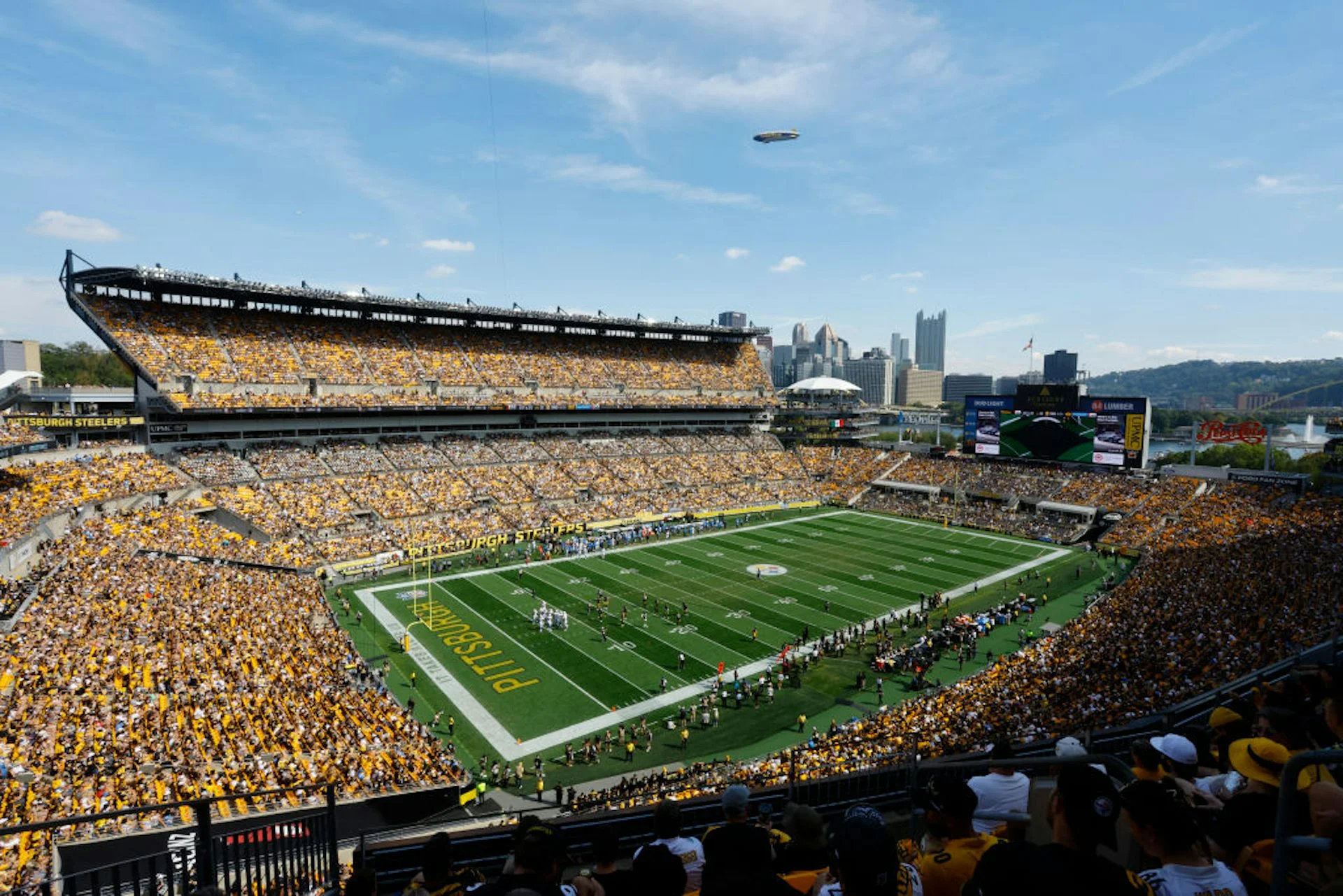
When the NFL draft touches down in Pittsburgh in April 2026, city officials will almost certainly lead with the economic numbers. Expect references to the $73 million Green Bay generated in 2025, the $213 million Detroit pulled in the year before, or the $164 million Kansas City reported in 2023. The figures are impressive — and almost beside the point.
As a sports marketing researcher who studies the economics of celebrity endorsements, I'm skeptical of short-term economic impact claims as the primary measure of success for events like this. The more consequential return on investment lies elsewhere — in something harder to quantify but far more durable.
Part of the problem is that mega-events routinely cannibalize existing activity as much as they generate new spending. Local residents often stay home to avoid the crowds, while economists have long documented the "displacement effect" — the phenomenon whereby an influx of out-of-town visitors simply replaces regular tourism and local spending rather than adding to it.
If Pittsburgh measures draft success strictly by hotel occupancy rates and weekend bar tabs, it will have missed the bigger opportunity. Because the draft rotates cities each year, the real value isn't a temporary revenue spike. It's brand equity — a lasting elevation of the city's reputation and perceived market value.
The endorsement signal
For three days, the NFL will function as a massive institutional endorser for Pittsburgh. And because attention is a scarce and valuable commodity, that endorsement carries weight that can dwarf any direct cash injection.
In marketing research, signaling theory helps explain why endorsements are so powerful. The shift from Pittsburgh saying "Trust us, we're great" to a globally recognized brand like the NFL saying "We chose them" is categorically different — and far more credible to outside audiences.
My own research on the golf industry illustrates how profound this effect can be. After Tiger Woods switched his ball allegiance from Titleist to Nike, the brand sold an additional 119 million golf balls over a decade, adding roughly $105 million to its bottom line. Woods' endorsement functioned as a market-wide signal of quality and legitimacy — one that even supported a 2.5% price premium, since higher prices themselves reinforce perceptions of product quality. You can read the full analysis here.
The NFL draft works the same way for host cities. By choosing Pittsburgh, the league broadcasts a signal that the city can manage a global stage — and that signal reaches audiences that no local ad campaign could touch.
This matters enormously for Pittsburgh's ongoing image challenge. Despite a decades-long reinvention as a hub for robotics, health care, and higher education, the city still struggles to shed its 20th-century Rust Belt identity in the national imagination. The draft offers a rare chance to reframe that narrative at scale.
Detroit offers the clearest recent precedent. In 2024, the city used the draft not just to throw a party, but to aggressively counter persistent narratives of urban decline and showcase the investments reshaping its downtown.

Those broadcast shots of a vibrant, packed downtown did more to modernize Detroit's image than any taxpayer-funded marketing effort could have managed. Kansas City saw similarly tangible downstream effects: the city added nearly 25,000 new residents in the year following its 2023 draft — a pace of growth that outstripped each of the prior four years.
A recruiting advantage hiding in plain sight
There's another dimension to Pittsburgh's draft opportunity that deserves attention: college football recruiting.
I've spent recent years studying how name, image and likeness (NIL) policies are reshaping talent acquisition in college sports. In today's environment, universities aren't just selling an education — they're selling a credible pathway to professional success. That's where hosting the draft creates an unexpected edge.
Regional programs like the University of Pittsburgh, Penn State, and West Virginia stand to benefit from a "halo effect" — the phenomenon where the prestige of a major endorsement spills over to elevate associated brands. For a highly recruited high school player watching the draft on television, seeing the road to the NFL run directly through Pittsburgh plants a powerful association: this region is where pro football happens.
That narrative will play out on air in real time. When ESPN sets up on Pittsburgh's North Shore, it won't just analyze Penn State quarterback Drew Allar's mechanics — it will contextualize his development as happening just two hours east of where the league's biggest stage is set.

For Pitt specifically, the effect could be even more direct. The recent emergence of linebacker Kyle Louis and running back Desmond Reid reinforces the credibility of a Pitt-to-pro pipeline that the draft's presence in the city will only amplify.
In a fiercely competitive recruiting landscape where virtually every major program now offers comparable financial packages, nonmonetary differentiation is increasingly decisive. Being in a city the NFL has explicitly chosen signals proximity to the league's orbit — and that signal resonates with the prospects who matter most.
None of this is guaranteed, of course. Mega-events carry real risk. If logistics break down, traffic becomes intolerable, or the fan experience disappoints, the same high-profile platform that amplifies success will amplify failure just as efficiently. The endorsement signal flips from "premier destination" to "not ready for prime time."
Pittsburgh has essentially landed a three-day commercial airing to tens of millions of Americans. The content is largely set. Now the city just has to make sure the production holds up.

Tim Derdenger does not work for, consult, own shares in or receive funding from any company or organization that would benefit from this article, and has disclosed no relevant affiliations beyond their academic appointment.