William Cecil's Succession Plan
Elizabeth I's near-fatal illness forced William Cecil and the Privy Council to confront the urgent — and deeply inconvenient — question of succession.
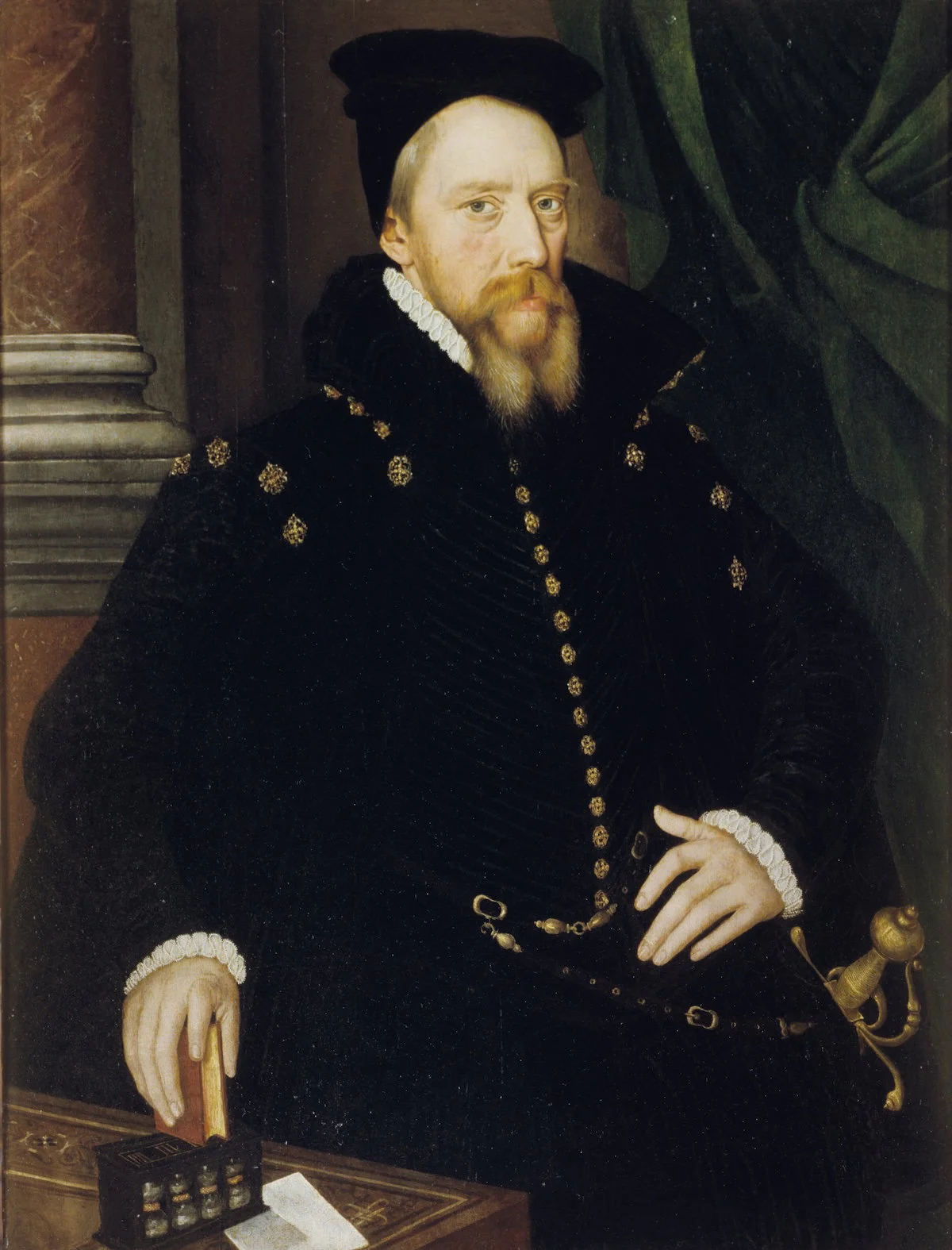
In October 1562, Queen Elizabeth I lay unconscious in her chambers as her court braced for the worst. She had contracted smallpox — a disease that could kill or permanently disfigure — and her survival was far from certain. With the queen's life hanging in the balance, William Cecil (1520–98), her principal secretary, convened the Privy Council at Hampton Court to address a question that could no longer be deferred: who would succeed a childless queen if she died?
The councillors debated the matter but reached no firm conclusion. Álvaro de la Quadra, the Spanish ambassador then stationed in London, observed that 'out of the 15 or 16 of them that there are there were nearly as many different opinions about the succession to the Crown'. On 23 October, word finally came from the queen's privy chamber that she would survive. But her brush with death had exposed a vulnerability that would not be easily forgotten.
Elizabeth's illness threw into sharp relief just how precarious England's Protestant settlement truly was, so recently established after the Catholic reign of her sister Mary I. The regime's survival rested entirely on a single woman's continued good health. The question of succession, previously assumed to be a matter that would resolve itself through the queen's eventual marriage, had suddenly become urgent in its own right. Yet solving it was far more complicated than identifying the problem. Succession fell within the royal prerogative, and any statutory intervention would require Elizabeth's consent — something her councillors suspected she would never willingly give.
Cecil refused to let the matter drop. Without a settled succession, he feared England could fracture into civil conflict, as it had during the Wars of the Roses. Even more troubling, to his mind, was the prospect of Elizabeth being succeeded by Mary Stuart, Queen of Scots — a Catholic claimant with arguably the strongest hereditary right to the throne. Cecil resolved to force the queen's hand, and to do so he needed a wider political stage than the council chamber. Shortly after Elizabeth's recovery, Parliament was summoned.
When Parliament opened on 12 January 1563, the succession was immediately at the centre of debate. The Commons moved swiftly, drafting a petition that urged Elizabeth both to marry and to follow the precedent set by her father. Henry VIII had used statute to reshape the succession three times — in 1533, 1536, and 1544 — alternately declaring Elizabeth legitimate, stripping that status, and finally restoring her to the line of succession while still technically classifying her as illegitimate. Parliament now invoked these Acts as a model, suggesting Elizabeth could do likewise to secure the realm's future.
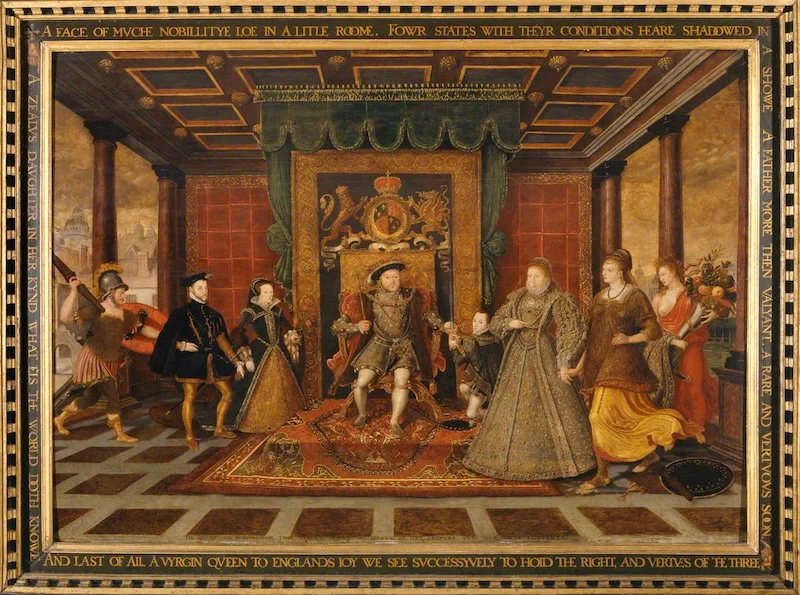
While the petition made its way to the queen, Privy Councillors sitting in the Commons kept pressure alive on the floor of the chamber. Sir Ralph Sadler, who opened by disclaiming he was 'not fitte to speke in so grete a matier as this is, wantyng wisdom, lerning, and experience', proceeded to do exactly that. It was at this point that Cecil — also sitting in the Commons — was tasked with drafting a specific clause to be attached to a succession bill.
What Cecil produced was not a list of potential heirs. It was an interregnum clause: a detailed constitutional mechanism by which Parliament could determine the next monarch should Elizabeth die without naming a successor. The clause stipulated that if:
the Queen's Majesty our soverayn lady shuld decess (which almighty God forbydd) without issew of hir body or before the tyme any person shall be declared by authoritie of parlement to be the leefull heyre or successor … that then and from thenc forth all shuch persons which shall be knowen to be of the prevee Counsell to hir Majesty shall remayne and contynew conusellores with lyke interest authorite place and degree, as at the tyme of hir Majestes dethe.
The implications were radical. Had this clause passed into law, the Privy Council and Parliament would have acquired the right not only to choose England's next monarch — a power traditionally belonging to the sovereign — but also to govern the realm in the interim. Crucially, the clause set no time limit on this arrangement, leaving open the possibility that ambitious councillors might deliberately delay naming a successor in order to extend their own authority.
When Parliament was prorogued in April, Elizabeth vetoed the clause. As a queen who had always been acutely sensitive to any erosion of her prerogative — and who governed in an era when female rule was still regarded with suspicion — she recognised the clause for what it was: an attempt to subordinate royal authority to parliamentary will. Yet the clause's failure does not diminish its historical significance. That Cecil — Elizabeth's most trusted and cautious adviser — was willing to contemplate a kingdom without a monarch, even temporarily, speaks volumes about how seriously he took the crisis. The episode also illustrates a broader truth: political systems are bound, often in ways that only become visible during emergencies, to the health of those who lead them.
Cecil did not abandon the project. In 1585, he attempted a far more ambitious version, envisioning a 'Grand Counsell' composed of 'all the Gr[eat] officers of the realm, and of the privie Counsell and Certan other publyck officers'. This body would be empowered to declare Elizabeth's death, pursue her assassins if she had been murdered, govern the kingdom, and convene Parliament to 'determin and decre to who the Crown shall in best right belong'. Again, Elizabeth withheld her approval.
In the end, the succession resolved itself without any of Cecil's carefully constructed mechanisms. In 1603, the transition from Tudor to Stuart rule proceeded peacefully — overseen, with some historical irony, by Cecil's own son and political heir, Robert. The interregnum plan, with its vision of parliamentary governance filling the void left by a vacant throne, was quietly shelved and left to gather dust for the remainder of Elizabeth's reign.
Elizabeth Tunstall is a visiting research fellow at Adelaide University.